2026
The Ministry Of Care
The Ministry of Care is a speculative design project that explores a feminist future using research through design as a method.
Set in the year 2038, the project imagines a world where care is recognised, measured and embedded into everyday systems. Through a series of diegetic prototypes —including a Care ID, public service posters, a newspaper, a digital portal and more — the project examines how care could shape identity, value, access and civic participation.
Rather than proposing an ideal future, The Ministry of Care uses speculation to provoke questions like: Who performs care? Whose care is valued? And what might be lost when care becomes institutionalised?
Outcome: An imagined speculative future brought to life through an interconnected ecosystem of artefacts, including the Ministry of Care, the Care Hub, a Care ID and digital portal, government and PILAA pamphlets, an orientation film, newspapers from 2038, and an interactive Care Hub kiosk.
Project partners:

Project Details:
Duration: 8 weeks
Team: Maitreyi Mandrekar, Mehal Chandra, Petrina Gana and Jiayi Tina Zhang
Methods: Design Futures, Speculative design, Research Through Design, Horizon scanning, World-building, Backcasting, Prototyping and User testing.

The Care Hub kiosk prototype.
What if the economy operated on care and empathy?
Care sustains families, communities and even economies, yet much of it remains unpaid, under-recognised and disproportionately carried by women and marginalised communities. Our initial enquiry asked whether making care visible could create a fairer system.
Researching the present to imagine the future


Horizon scanning bingo and a few exercises we did to explore our designed future. Click here to download or view the Horizon scanning bingo.
We used design future tools like Evidence Safari and Horizon Scanning to explore current signals around unpaid care, digital identity, workplace monitoring, emotional intelligence, changing labour structures and care policy.


These signals helped us move from conventional “How might we?” questions towards more provocative “What if?” questions.

A few shortlisted "What If?" questions we began to explore through the method of RtD (Research through design).
Building the world of 2038
We created a fictional history for the Care World, tracing how political, social and technological shifts could lead to care becoming the organising principle of society by 2038.

In this world:
-
Care work is recorded through a national Care ID
-
Citizens earn Care Credits for recognised care activities
-
Access to benefits is linked to participation
-
The Ministry of Care governs the system
-
Local Care Hubs connect citizens to services and care jobs (including peer care and community care)
-
Citizens progress through four care-status tiers: Neighbour, Keeper, Weaver and Steward
Backcasting helped us understand that this was not simply a caring society. It was a highly controlled political system in which care had become mandatory and citizenship was tied to compliance.
The speculative service ecosystem
Entry and identity
Care ID
A wearable sticker chip that acts as a person’s entry point into the care economy. It makes participation visible on the body and allows care activity to be tracked.


Prototyping the Care ID and testing it with a few peers.
Services and infrastructure
Care Hub registration
By bringing registration, identity, services and participation into one connected journey, the Care Hub transforms care into a formal civic system.

Prototyping the registration process at the Care Hub. (Includes the orientation video, the interactive kiosk and the care ID prototypes.)


Prototyping the Kiosk and the Care hub
Public communication
Ministry of Care posters and PILAA pamphlets
Government communications that promoted registration and framed care as a national responsibility. Public information materials imagining PILAA’s role within this future.


Early iterations of the government communications
Culture and public discourse
1. Speculative newspaper
A 2038 newspaper showing both the apparent progress and the emerging social problems of the Care World.

2. Fictional Reddit forum and YouTube Short
Media artefacts exploring backlash, system gaming, masculinity, care influencers and resistance to mandatory care.


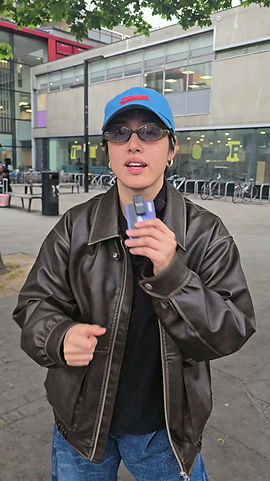
These artefacts functioned as diegetic prototypes: they did not merely describe the future, but allowed people to experience it from within.
Prototyping the future
We enacted the Care ID registration process with participants. They selected a skin-art design, received the wearable ID and explored the portal, public communications and imagined benefits of the system.
The prototypes acted as research tools. Instead of asking people whether they supported a care economy, we made the system tangible enough for them to respond to it emotionally.


Iterations and research through prototyping (research through design method)
We then developed the experience further and tested later iterations with members of the public at a feminist futures exhibition, allowing us to observe a wider range of spontaneous reactions and conversations.


Testing out prototypes at a design futures exhibition in London.


The outcome was not a proposed solution, but a public-facing environment for debate: a way to make the political and ethical consequences of a future system tangible before it exists.
The Care World did not reveal a better system. It revealed the limits of turning care into infrastructure.
My Contribution and Reflections
This project changed how I understand speculative design. I began by thinking that design futures was about creating better futures. I left understanding that its value lies in making assumptions, power structures and political consequences visible.